Nobody Wants Your Twenty-Minute Intro, and That's Exactly Why You Should Keep It
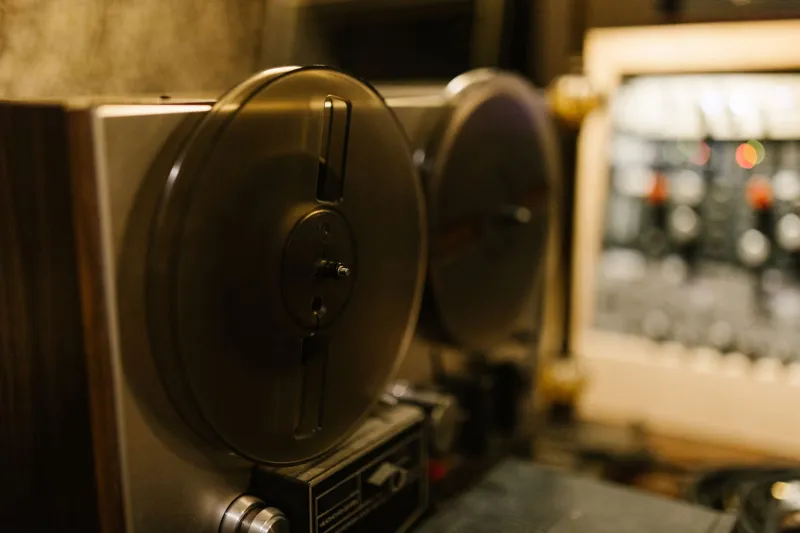
My friend Derek once made a song. It was a good song — catchy, tight, about three and a half minutes of honest indie rock. But the file he sent me opened with nineteen minutes and forty seconds of ambient tape hiss, a field recording of a rainstorm in Flagstaff, and a synth line that wandered around like a drunk uncle looking for the buffet.
"Derek," I said, "you know people are going to skip this."
"Obviously," he said. "It's not for them."
I've thought about that sentence for years. It might be the most important thing anyone has ever said to me about making things.
The Parts We Apologize For
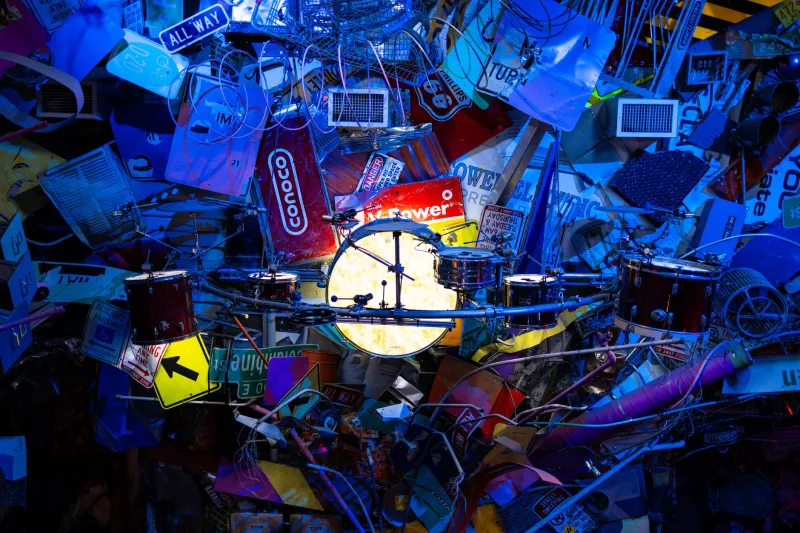
Every creative person has a version of Derek's rainstorm intro. It's the forty pages of family history your novel accumulates before the plot shows up. It's the seven-minute establishing shot in the short film you shot on a borrowed camcorder. It's the wall of your garage that is now entirely covered in bottle caps even though you originally just wanted to fix a shelf.
The rulebook says cut it. Editors say cut it. The algorithm absolutely screams cut it. Attention spans are short, the thinking goes, so give the people the good stuff immediately, front-loaded, optimized, no wasted motion.
And look — I'm not going to tell you the rulebook is always wrong. Sometimes the intro IS too long. Sometimes the backstory really is boring. Discipline matters, and "kill your darlings" didn't become a cliché because it was invented by idiots.
But I've started to notice something about the stuff creators cut: it's almost always the stuff that made them start in the first place.
Overindulgence Is a Fingerprint
Here's my working theory. The efficient parts of your work — the tight verses, the clean plot beats, the functional paragraphs — are the parts shaped by outside forces. Craft books, feedback, the vague imagined committee of everyone who might ever judge you. Those parts are competent. They're also the parts most likely to sound like anyone.
The gratuitous parts aren't shaped by anyone but you. Nobody requested the rainstorm. Nobody asked for the bottle cap wall. Nobody needed forty pages about a fictional Ohio town's 1893 mayor election. You made those things because some private, unexplainable itch demanded it. And that itch? That's your voice. That's the actual you showing up on the page, in the mix, on the wall.
When you cut the weird part, you're often not tightening the work. You're sanding off the fingerprint.
The Case for Keeping the Weird Parts In
I'm not saying never edit. I'm saying edit in a different direction than you've been taught. Before you delete the indulgent thing, ask yourself one question: did I cut it because it's bad, or because I'm embarrassed that I loved it?
Embarrassment is a terrible editor. Embarrassment is why a thousand songs sound identical and why every movie trailer has the same bass swell. The rainstorm intro got skipped by ninety percent of listeners — and the ten percent who stayed? They became Derek's actual audience. They weren't there for the song. They were there for the person who'd put a rainstorm in front of it and refuse to apologize.
There's a version of your work that's efficient, marketable, and interchangeable with a thousand others. And there's a version with twenty minutes of nonsense bolted to the front. One of those is a product. The other is a signature.
A Practical Compromise (Sort Of)
If you can't stomach shipping the whole indulgent mess, try this: keep it, but move it. Put the backstory in the appendix. Release the long intro as a separate track. Turn the bottle cap wall into its own photo essay. The indulgence doesn't have to sit at the front door — it just has to exist somewhere, intact, un-sanded.
Because here's the thing nobody tells you: the weird part is often the seed of the NEXT thing. Derek's rainstorm intro became a whole ambient side project that, frankly, more people care about than the original song ever was. The forty pages of backstory became a second novel. The junk you almost cut is often not excess at all. It's a preview.
So keep the rainstorm. Keep the forty pages. Keep the part nobody asked for. It's the only part that's fully, unmistakably yours — and someday, someone's going to hear it and realize they've been looking for it their whole life.