In Praise of the Junk Drawer Masterpiece: Your Abandoned Projects Are Doing Something
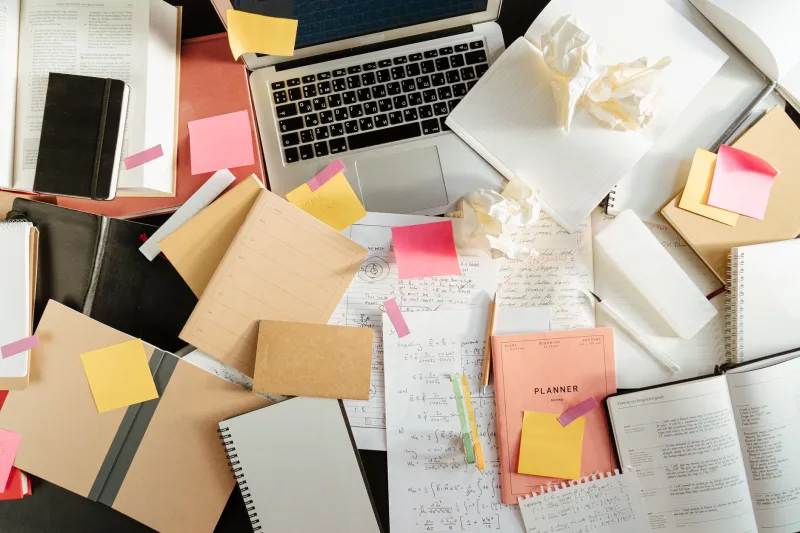
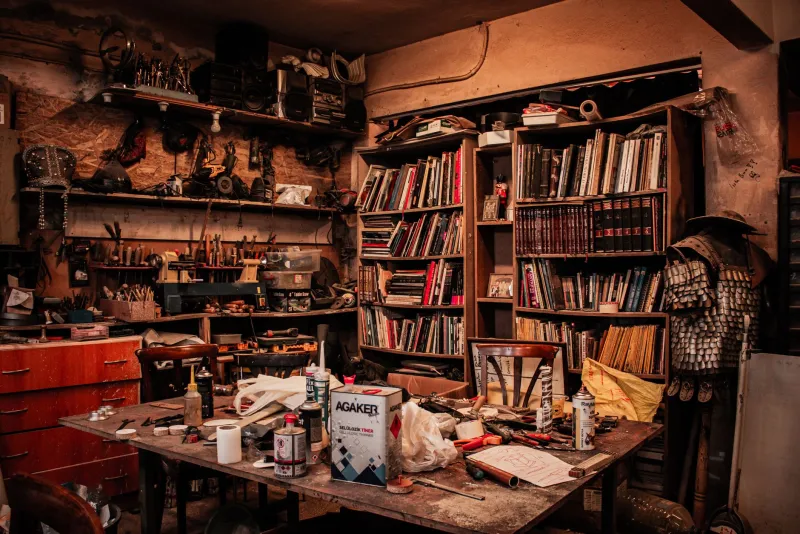
There's a drawer in my desk — metaphorically speaking, though an actual version also exists — that contains: a screenplay that dies at page 40, a sourdough starter I killed twice, a short story collection titled Nobody Asked, and a business plan for a screen-printing operation that peaked with the name and went downhill from there.
I used to think of all of this as debt. Evidence of a pattern. Proof that I start things and don't finish them, which — if you believe the hustle-industrial complex — is basically a moral failing with a LinkedIn post attached.
I've changed my mind. I think the drawer is the most productive thing I own.
The Shame Economy of the Unfinished
America has a weird relationship with completion. We worship the launch, the release, the "out now." Productivity gurus make seven figures telling you to "ship it" — that anything short of a finished, published, monetized artifact is procrastination wearing a beret.
But here's what nobody puts on the motivational poster: finished things are the visible output of a process that is mostly invisible, mostly unfinished, and mostly where the actual learning happens. You see my published essay. You don't see the 900 discarded drafts that taught me how to write it.
The unfinished work isn't the opposite of the finished work. It's the tuition.
A Field Taxonomy of Abandonment
After years of informal research (read: avoiding my own deadlines), I've identified three distinct species of abandoned project. Knowing which one you're dealing with changes everything.
The Dead-End. This project had no there there. The concept was thin, the execution worse, and the only reason you kept going was sunk-cost guilt. Let it go without a funeral. Dead-ends aren't failures — they're negative space that showed you where the real idea lives. I've written entire essays that exist only so I could discover the better essay hiding underneath them.
The Too-Early. This one hurts. You had the idea before you had the skills, and the gap between your taste and your ability was so wide you fell in. The novel you couldn't write at 24 might be exactly the novel you can write at 34 — and the 24-year-old version isn't a failure, it's a rehearsal. Skills catch up. Keep the bones.
The Not-Yet. This is the sneakiest and most common. The project isn't dead; it's dormant. It needs a missing piece — a second character, a better question, a year of living that gives you something to say. These projects sit in the drawer quietly reorganizing themselves. Some of my best work came back to me after two years of "abandonment" and practically wrote itself, because the compost had time to break down.
The Dead-End you release. The Too-Early you revisit. The Not-Yet you trust. Mislabeling them is where the shame comes from — we treat every abandoned project like a Dead-End when half of them are just Not-Yets that needed more time than the calendar allowed.
What the Compost Actually Does
Here's the mechanism, as far as I can tell: unfinished work stays chemically active in your brain. Psychologists have a name for this — the Zeigarnik effect, the tendency for interrupted tasks to keep rattling around upstairs. Your abandoned screenplay isn't gathering dust; it's being quietly rewritten by your subconscious while you do the dishes.
This is why abandoned projects so often become other projects. The failed podcast teaches you your interviewing voice. The half-built chair teaches you your eye for joinery. The dead-end novel hands you its best character, who walks out of the wreckage and into a short story that actually works. Nothing in the drawer is wasted. It's all in the soil.
Audit Your Drawer, Don't Empty It
So here's my proposal, and I mean it as a genuine practice: once a year, open the drawer. Sort everything into the three categories. Kill the Dead-Ends with gratitude — say thank you, mean it, move on. Flag the Too-Earlys with a date: "revisit in 2027." And pick one Not-Yet to bring back into the light.
That's it. No 5 a.m. routine, no accountability spreadsheet. Just an honest annual look at the compost heap.
Because the goal was never to finish everything. The goal was to keep the soil rich. The drawer isn't a graveyard — it's a greenhouse, and something in there is almost always growing.
Go check on it.