Dollar Store Philharmonic: Making Music Out of Stuff You Already Own
Last Tuesday I recorded a shopping cart rolling across a Target parking lot and it sounded, with a little reverb, like a whale with opinions. Total cost: zero dollars. Total equipment: the phone already in my pocket.
This is the part of the creative life nobody puts in the ads. You do not need gear. You need ears and a mild willingness to look weird crouching next to an ice machine.
The World Is Already Mic'd
Field recording sounds fancy. It isn't. It's just paying attention with your phone's voice memo app open. The hum of a refrigerator, the specific clatter of a diner at 7 a.m., the way a screen door in Ohio has a rhythm all its own—this is raw material, and it's free, and it's everywhere.
Some of the most famous sounds in music history started exactly this way. Producers have built entire tracks out of a squeaky chair or a hit of a lighter. The ambient world is a sample pack that never runs out.
Here's the beginner's toolkit, and I'm serious about how cheap this is:
- Your phone. Voice memos. Done. That's the recorder.
- A dollar-store trip. Plastic cups, rubber bands, a metal measuring cup, a kid's xylophone, a bag of dried beans. Congratulations, you now own a percussion section.
- A thrift store instrument. That dusty recorder (the flute kind) or autoharp nobody wants costs less than lunch. It will be out of tune. Out of tune is a texture, not a flaw.
- Free software. Audacity. GarageBand. Both cost nothing. Both do more than studios had in 1985.
The Legal Gray Zone (the "Mostly" Part)
Now let's talk about the fine print, because I promised "legally, mostly."
Recording sounds in public is generally fine in the US. The law gets fussy when you capture people having private conversations or when something identifiable—like a voice—becomes the centerpiece of your work. The safe rule: record environments, not individuals. A crowded farmers market is fair game. A specific stranger's phone call is not.
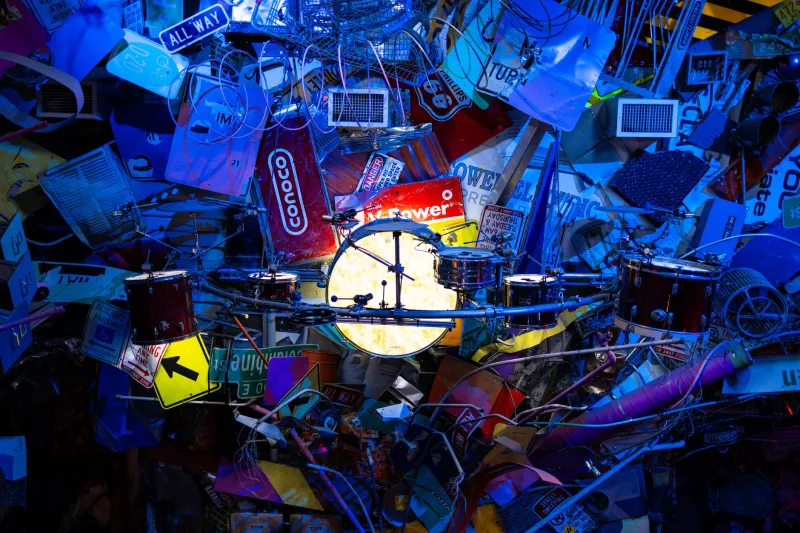
Sampling actual commercial music is a different animal entirely—clearing a sample can cost real money, which defeats the whole point of the dollar-store aesthetic. The beautiful loophole of found sound is that a garbage bin lid doesn't have a publisher. Neither does rain. Neither does your cat walking across a thrift-store keyboard. Build your orchestra out of things nobody owns, and nobody can send you a cease and desist.
Why This Beats Buying Your Way Into Art
There's a trap in the creator economy that says the gear comes first. It doesn't. Constraint is a collaborator. When your only instrument is a rubber band stretched over a shoebox, you make choices you'd never make with a wall of plugins—and those choices are where personality lives.
So here's my challenge: this week, record three sounds from your ordinary life. Hit the dollar store with a ten-dollar bill and a bad attitude. Make something. It might be garbage. It might be a garbage bin orchestra. Either way, you'll have made it out of the world instead of out of a shopping cart.