Performing for an Empty Room (And Why That's the Best Gig You'll Ever Play)
Somewhere in America right now, a person is uploading a song that zero people will hear today. A painter is posting work to a feed where the only like will come from a bot selling crypto. A writer — maybe you — is publishing an essay into the void and refreshing the analytics page like it owes them money.
I want to make a strange claim: this is the best part. Not the most fun part, maybe. Not the part anyone would choose. But historically speaking, the empty room is where the interesting stuff happens.
History's Long Game of Talking to Nobody
Weird history time, because this site doesn't do anything halfway. Van Gogh sold famously almost nothing in his lifetime — one painting, by most accounts, for around 400 francs — while writing hundreds of letters to his brother Theo describing a body of work that would eventually rearrange art history. He was, functionally, an artist with an audience of one, and the one was his brother.
Emily Dickinson published fewer than a dozen poems while alive. She was one of the most important American poets of the 19th century, and her contemporary readership could've fit in a phone booth. Henry Darger, a Chicago janitor, spent six decades writing and illustrating a 15,000-page epic in his one-bedroom apartment that nobody — nobody — knew about until shortly before he died.
Now, I'm not romanticizing obscurity to the point of delusion. Darger's story is beautiful and also kind of a tragedy. But here's the pattern worth noticing: the pre-audience years weren't a delay before the real work. They were the real work. The empty room is where you figure out what you actually sound like, because nobody's clapping or booing to steer you.
The Algorithm Wants You to Pick a Cage
Here's my heresy for the day: the modern pressure to "niche down" is the single worst piece of advice ever applied to young creatives, and it exists purely to serve the machine, not you.
The platforms want to categorize you. Consistent content! Clear niche! Post daily about one topic so the algorithm knows which box to file you in! This is great advice if your goal is to become a content-shaped object. It's terrible advice if your goal is to become an artist.
Van Gogh would've been told to stick to one subject. Dickinson would've been told her lowercase dashes were confusing her brand. The eclectic, restless, try-everything creative — the kind of person who paints on Tuesday and writes a weird essay on Thursday — is uniquely punished by systems that reward sameness.
So resist it. The zero-follower era is the last time in your creative life when you can post a watercolor of a possum on Monday and a hot take on municipal zoning on Wednesday without anyone filing a complaint. Enjoy the lawlessness. It's temporary.
Your First Hundred People Are Found, Not Farmed
The practical part, because I'm not a monster. The idea of the "first 1,000 true fans" has been kicking around the internet for almost two decades now, and it holds up — but I'd argue your first hundred matter more, because those are the people who found you before it was easy.
Where do they come from? Not from broadcasting. From showing up in small rooms. Niche subreddits where people actually talk. Discord servers for your specific weird interest. Comment sections of creators adjacent to you, where you leave thoughtful responses instead of "great post!" Local open mics, zine fairs, the community college continuing-ed class. The internet made finding people easier and feeling found harder, so the small rooms are where the real ones live.
Treat your early public work like a rehearsal in a rented hall: sloppy, generous, and open to anyone who wanders in. Reply to the three people who comment. Make things for them sometimes. The audience of zero becomes an audience of twelve, and twelve becomes a hundred, and — this is the part nobody believes until it happens — a hundred attentive humans is a career.
Enjoy the Silence While It Lasts
One day, people will have opinions about your work. Some will be wrong, some will be harsh, and all of it will subtly bend what you make. That's the deal you're signing.
But right now? Right now you can fail in public and almost nobody notices. You can experiment, pivot, embarrass yourself, and reinvent — all at essentially zero cost. That's not failure. That's the cheapest art education in human history.
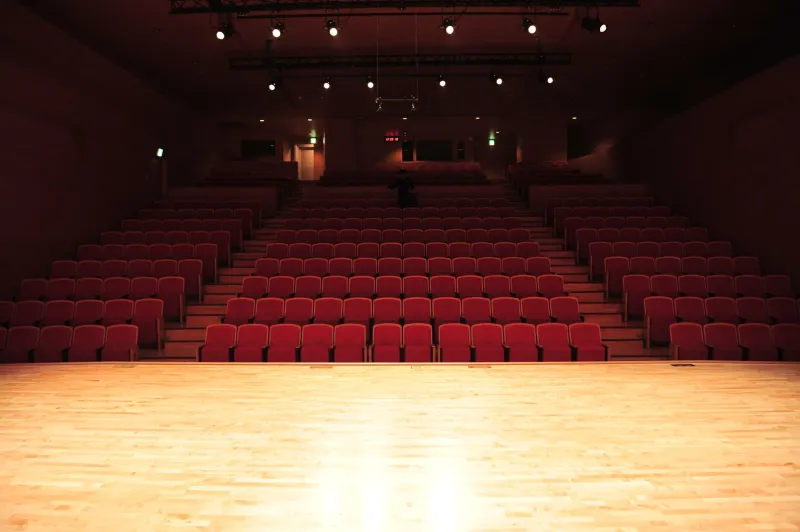
The room is empty. The lights are on. Play the set anyway.