EVERYTHING'S GOTTA GO: The Season I Made Art Like a Closing Furniture Store
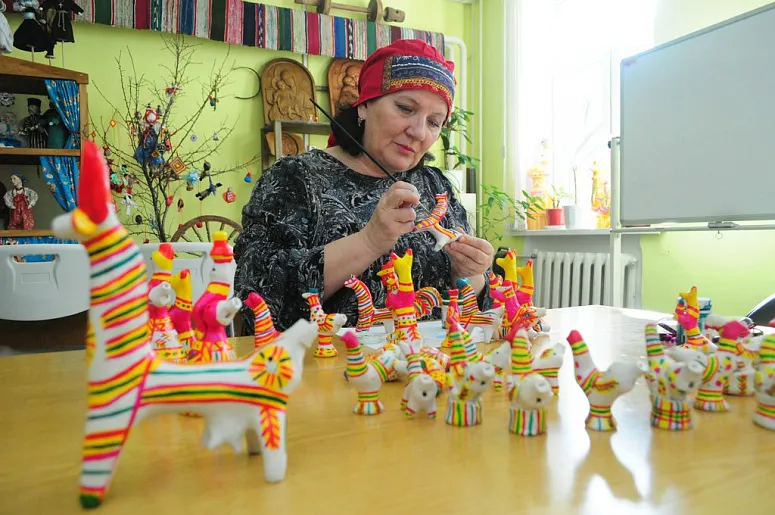
Photo: Пресс-центр Правительства Тульской области., CC BY 4.0, via Wikimedia Commons
There's a sign on a chain-link fence in my neighborhood that I think about more than most people I actually know. It's hand-painted, slightly crooked, and it says, in dripping capital letters: EVERYTHING'S GOTTA GO.
That's it. No dates, no phone number, no prices. Just the declaration. Like the person who made it wasn't selling so much as confessing.
I sat in my car in front of that fence for a solid four minutes, which is the kind of thing you do when you're a creative person looking for any excuse not to go to the studio. And somewhere between the second and third minute, a thought landed on me like a bird on a freshly washed car: what if I made everything like it had to go?
So I did. For one full season — roughly three and a half months — every song, sketch, essay, and half-idea I produced had to follow one rule: nothing gets saved.
The Rules of Letting Go (Yes, There Were Rules)
Constraints are the whole game, so here's what I committed to:
- No archiving. Recordings got deleted after one listen. Sketches went into the recycling, not the flat file.
- No 'final versions.' If I caught myself doing a fourth pass on a mix or a third rewrite of a paragraph, that was a red flag. Two drafts, then it's done and gone.
- One showing, then gone. If I wanted anyone to experience a piece, it had to be shared once — played live once, read aloud once — and then it ceased to exist in any retrievable form.
My partner called it "art with the survival instincts of a mayfly." She wasn't wrong.
What Disappearing Does to the Work
Here's the thing nobody tells you about permanence: it's a tyrant. The moment you decide something might be the one — the portfolio piece, the gallery centerpiece, the thing your obituary will mention — you start making it for the future. And the future is a terrible audience. It's judgmental, it's not even alive yet, and it never laughs at your jokes.
Working under a delete-on-sight policy did something strange to my hands. I got looser. Chords I'd never risk on a 'real' track suddenly showed up. Sentences got shorter and weirder. Without the pressure of permanence, the work stopped auditioning and started just... existing.
I made more in that season than in the previous two years. Not better, necessarily — the recycling bin saw some genuine garbage — but more, and more honestly.
America Has a Storage Problem
Somewhere in the middle of the season, I drove past a self-storage facility with one of those marquee signs. This one read: FIRST MONTH FREE. And it hit me that we are a nation that pays monthly rent for things we've decided not to look at.
There are an estimated 50,000+ self-storage facilities in the United States. That's more than the number of McDonald's, roughly. We are drowning in kept things — kept furniture, kept boxes, kept drafts, kept ambitions. The garage band that never played out. The novel in the drawer. The half-finished canvas under the bed.
Permanence, it turns out, is where creative energy goes to be quietly entombed. We hold onto work because finishing it means it can be judged, and storing it means we never have to find out.
The yard sale — that most American of institutions — is the opposite impulse. It's the moment somebody looks at a garage full of kept things and says: no more. It's an act of creative mercy, really. The sign knew it. EVERYTHING'S GOTTA GO is maybe the most liberating sentence in the English language.
What I Kept (Ironically)
When the season ended, I did keep something: the sign itself. I knocked on the door of the house with the fence, explained the whole weird experiment to a very patient retired schoolteacher named Dolores, and she gave me the sign for free. She said it had been up since a move eight years ago. She'd just never taken it down.
So the one artifact from my season of impermanence is a piece of plywood that outlasted the entire experiment. Make of that what you will. I've made plenty of it.
What I actually carried forward was smaller and better: the habit of asking, before I start polishing anything, who is this for, and when? If the answer is "some hypothetical future," the work dies on the vine. If the answer is "this person, this room, this Tuesday," it's alive.
Ephemerality isn't the enemy of art. It might be the only honest deadline we've got. Everything's gotta go — the trick is making something worth losing first.