The Year I Fired Myself From Naming Things: A Random Word Experiment in the Art Market
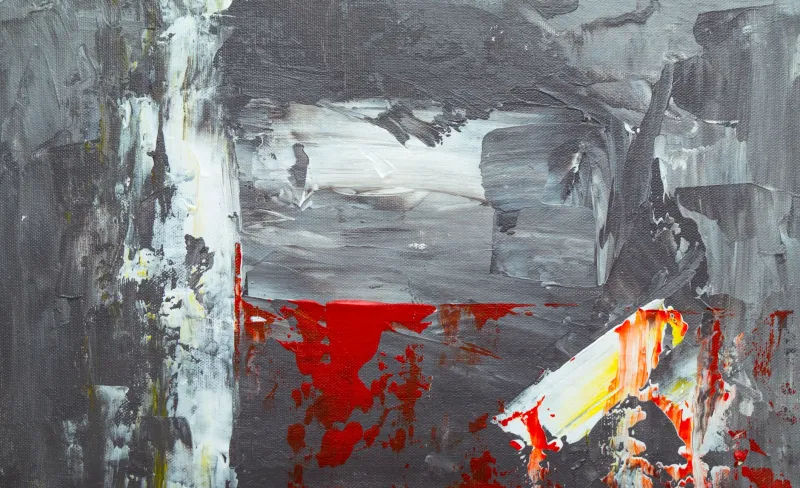
Let's be honest about something artists rarely admit out loud: titling work is a special kind of torture. You spend three weeks on a painting, then forty hours staring at the cursor blinking in a text field, wondering if "Dissolution" sounds pretentious or if "Untitled No. 4" sounds like you gave up. I've been there more times than I can count. So last January, fueled by too much gas station coffee and a genuine contempt for my own indecision, I made a rule: for one full year, a random word generator would name everything I made.
No vetoes. No tweaks. Whatever the machine spit out became the label on the wall card, the listing, the whole identity of the piece.
The Rules of the Game
The setup was stupidly simple. I used a free online generator that pulls from a dictionary of about twenty thousand English words. One click, one title. If the piece was a diptych, I clicked twice and hyphenated the results. That's it. I documented every generated title in a spiral notebook I kept in the studio, mostly so I'd have receipts when people inevitably asked if I'd lost my mind.
The first few months were rough. Watching a piece I genuinely loved get saddled with a title like "Gravel Sentiment" felt like naming your child via dartboard. But something interesting started happening around month three.
People Didn't Blink. People Interpreted.
Here's the part that rearranged my brain: nobody at shows or online seemed to care that the titles were nonsense. In fact, they cared more. A woman in Portland stood in front of a mixed-media piece called "Fern Obituary" for nearly ten minutes, then told me it reminded her of her grandmother's garden and the funeral she'd never gotten closure on. I never put any of that in the piece. She built the whole narrative from two random words and some torn paper.
That's when it clicked. A title isn't a description — it's a prompt. It's the first line of a story the viewer gets to finish. When I titled things deliberately, I was actually closing doors, telling people exactly which story to have. Random titles pried every door open at once.
What Sold (And What Didn't)
Over the twelve months, I produced and listed forty-one pieces with machine-generated names. Roughly two-thirds sold, which was actually slightly better than my previous year's rate. But the pattern in what sold was the interesting part.
Pieces with what I'd call "evocative collisions" — two words that don't belong together, like "Copper Lullaby" or "Motel Theology" — moved fastest and fetched the best prices. Buyers love a small mystery. Titles that generated as a single mundane word, like "Spoon" or "Tuesday," sat around longer. Not because the work was weaker, but because a single flat word gives the viewer nothing to chew on. Even randomness, it turns out, benefits from a little friction.
The biggest sale of the year was an abstract piece titled "Vespers Pancake," which I almost broke my no-veto rule over. A collector in Chicago bought it specifically because of the title. Her exact words: "I don't know what it means and I don't want to know."
The Uncomfortable Conclusion
I'd love to tell you this experiment proves titles don't matter. It proves the opposite. They matter enormously — just not the way we think. The buyer of "Vespers Pancake" wasn't purchasing paint and canvas. She was purchasing a feeling she'd authored herself, with my random words as the writing prompt.
So did I keep the system? Partially. I still generate titles for most work, but now I allow myself one veto per month. It's a compromise between the artist who wants control and the one who learned, somewhat painfully, that he was never really in control of meaning in the first place. The audience was always writing the story. I was just finally getting out of its way.
If you're an artist who's been agonizing over a title for a week, try it. Click the button. Ship the weird name. Worst case, you'll get a good story. Best case, you'll learn that the story was never yours to write anyway.