Five Bucks, Five Objects, One Very Confused Saturday: Notes From a Garage Sale Curator
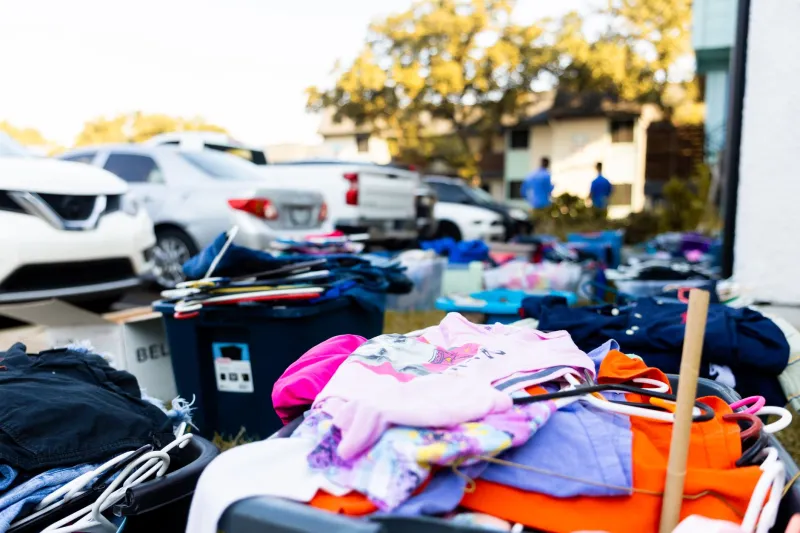
Every object in a thrift store or on a folding table in someone's driveway used to be important to somebody. That's the thought that got me. And it seemed like a thought worth testing, so last month I gave myself a challenge: one Saturday, the local garage sale circuit, a hard budget of twenty dollars, and a strict rule — I could only buy the five strangest things I found. Then, whatever came home, I had to turn into a museum exhibit. A real one. Labels, theme, the works. My living room would become the gallery.
Call it an experiment in the archaeology of American Saturday mornings.
The Hunt: How to Spot Junk With Potential
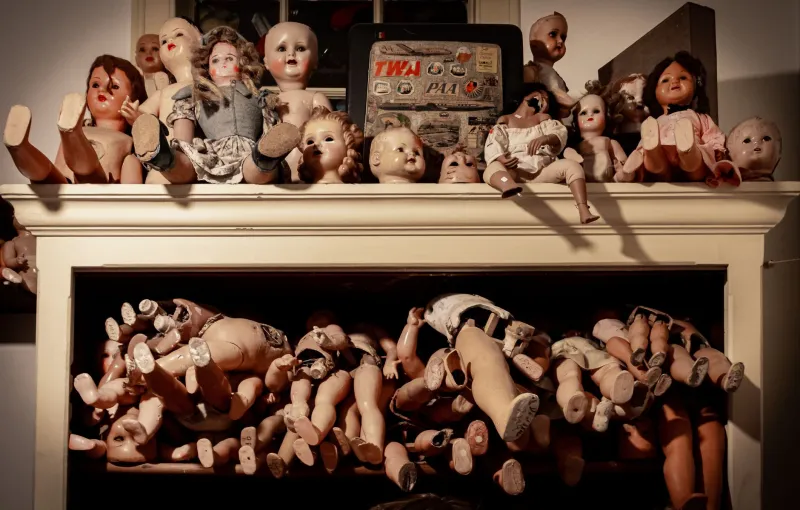
First, the practical stuff, because if you try this yourself you'll need a strategy. Garage sale junk comes in two flavors: generic junk (mass-produced, broken in a boring way, clearly destined for the landfill) and haunted junk — objects that make you immediately ask "why does this exist and why is it here?"
You're hunting for the second kind. My field notes:
- The best stuff is usually in a shoebox. People don't price weirdness individually. It's too strange to display, so it gets boxed, and boxed weirdness sells for a quarter.
- Ask the owner for the story. This is non-negotiable. Half the exhibit value of an object is the sentence "my dad won this in a poker game in 1987 and nobody knows what it is."
- Avoid anything that's trying to be quirky. Mass-produced gag gifts are junk. Handmade failures are treasure. The difference is intent.
- Go early for selection, go late for prices. By noon, sellers will practically pay you to take the ceramic thing they can't identify.
The Haul
By 3 p.m., I had my five objects, all told costing me $11.50:
- A hand-painted wooden duck wearing what appears to be a police hat, artist unknown, expression deeply troubled. ($1)
- A commemorative plate from a 1976 bicentennial celebration in a town that, according to my research, does not exist. ($2)
- A single microwave oven instruction booklet, translated into four languages, for a microwave brand I could not find any record of. (Free — the seller threw it in with the duck.)
- A trophy for "Second Place — Best Lawn," dated 1994. ($3.50)
- A handwritten recipe card for something called "Funeral Potatoes" with an annotation that just says "NOT for funerals." ($5 — the seller wouldn't go lower and honestly, respect.)
Building the Museum
Back home, the real work started. Every good exhibit needs a thesis, and after an hour of staring at the duck, I landed on one: "Relics of Small Mysteries: Everyday Objects From the Edge of Explanation."
I printed little museum-style placards. The duck became "The Duck Constable (c. 1980s), mixed media, artist's intentions lost to time." The plate got a full panel about phantom towns and possibly a misprinted name — or possibly something weirder. The trophy earned the longest label: a meditation on how somewhere in America, in 1994, a person was genuinely, publicly honored for having the second-best lawn on the block, and how that's honestly more meaningful than most awards anyone gets at work.
The recipe card, displayed under a glass frame I bought for the occasion, was the crowd favorite — my one visitor, my neighbor Janet, stood in front of it for a full minute and said, quietly, "My mom made those." Then she told me a story about her mother I'd never heard in six years of living next door.
And that's when the whole experiment clicked into place.
What the Objects Were Actually Worth
Here's the thing about other people's discards: the sale isn't the end of an object's story, it's a handoff. The duck was somebody's craft project, probably a gift, probably given with love and received with confusion. The lawn trophy was a person's whole summer. The recipe card fed a family for decades before it fed mine (metaphorically — I have not made the potatoes, the annotation intimidates me).
None of these things were trash. They were just stories that had run out of listeners. A garage sale museum, it turns out, isn't really about the objects. It's about becoming a listener again. Every weird thing on a folding table in an American driveway is a small mystery with a paper price sticker, waiting for one more person to wonder about it.
Total exhibit budget: $11.50 plus a picture frame. Total runtime: one Saturday. Number of mysteries solved: maybe two. Number of mysteries acquired: at least seven.
I'd call that a successful opening. The "Museum of Small Mysteries" is now a permanent installation in my hallway, and the docent (me) gives tours by appointment, or whenever Janet brings potato casserole.